
Australia’s student visa appeal system is changing in 2026, and many international students are concerned about what these changes could mean for their future.
Under the new Australia ART Rules 2026, some student visa appeals may be reviewed without an oral hearing. Instead of appearing before a tribunal member, applicants could receive a decision based solely on the documents and written submissions provided.
For students facing a student visa refusal in Australia, this represents a major change in the Australian visa appeal process.
Key ART Changes in 2026
- Some visa review cases may proceed without oral hearings
- Greater focus on paper-based reviews
- Faster tribunal processing timelines
- Well-prepared documents are now more important than ever
- Genuine Student statements may face stricter scrutiny
What Is the ART in Australia?
The Administrative Review Tribunal (ART) replaced the Administrative Appeals Tribunal (AAT) as Australia’s new review body for migration and visa-related matters.
The ART handles:
- Student visa refusals
- Visitor visa refusals
- Partner visa appeals
- Work visa review matters
Under the Australia ART Rules 2026, the government aims to reduce processing backlogs and improve efficiency.
Students should also stay updated with Australia’s new visa system changes in 2026, especially regarding student and work visa approvals.
What Is an ART Review Without a Hearing?
An ART review without a hearing means the tribunal may decide a case based only on:
- Application documents
- Supporting evidence
- Written submissions
In certain situations, applicants may not be invited to attend a personal hearing.
This change is expected to affect many Australian student visa appeal cases in 2026.
Why Is Australia Introducing These Changes?
The Australian government introduced the new ART system to:
- Reduce processing delays
- Clear visa appeal backlogs
- Improve review efficiency
- Speed up migration decisions
With the increasing number of student visa refusals in Australia, authorities are placing greater emphasis on document-based assessments.
How Will This Impact Student Visa Applicants?
The new Australia ART Rules 2026 could significantly affect applicants who rely on oral hearings to explain their circumstances.
Key changes include:
| Previous System | New ART System 2026 |
|---|---|
| Oral hearings were common | Hearings may not always occur |
| Greater opportunity for explanation | Stronger focus on documents |
| Longer processing timelines | Faster decision-making |
| Higher applicant interaction | Limited direct communication |
This means properly prepared documentation is now more important than ever.
Example Scenario: Why Documentation Matters
Imagine a student visa application being refused due to insufficient financial evidence.
Under the previous system, the student may have had the opportunity to explain the situation during an oral hearing. However, under the updated Australia visa appeal process, the ART may decide the case entirely based on the submitted documents.
This is why complete, accurate, and well-prepared evidence is now critical.
Why Student Visa Refusals Could Increase
Under the updated Australia visa appeal process, incomplete or poorly prepared applications may face a higher risk of refusal.
Common refusal reasons include:
- Weak Genuine Student statements
- Financial inconsistencies
- Incomplete documentation
- Course mismatch
- Poor immigration history
If your documents are unclear, an ART review without a hearing may leave little opportunity to clarify your situation later.
What Students Should Do Now
If you are applying for a student visa in 2026, proper preparation is essential.
Important steps include:
- Submitting complete financial documents
- Preparing a strong Genuine Student statement
- Ensuring course relevance
- Maintaining consistency across documents
- Seeking professional review before submission
These steps can help reduce the chances of a student visa refusal in Australia.
What Happens If Your Student Visa Is Refused?
If your visa is refused, you may still have the right to apply for an Australia student visa appeal through the ART.
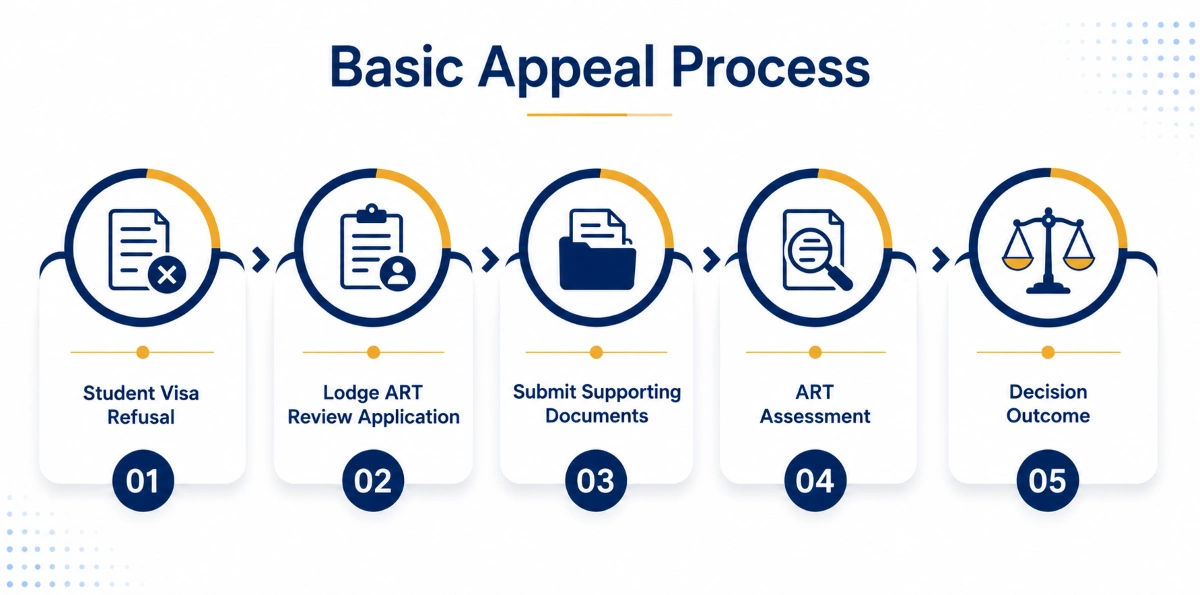
Processing Times Under the New ART System
Although timelines may vary, the new Australia ART Rules 2026 aim to reduce waiting periods.
| Process | Estimated Timeline |
|---|---|
| ART Review Application | Few days |
| Document Submission | 2–6 weeks |
| Decision Timeline | Several months |
Complex cases may still take longer depending on the evidence and case history.
Why Professional Guidance Matters
Under the new system, documentation carries more weight than ever before.
Because some student visa appeals in Australia may proceed without oral hearings, applicants must ensure:
- Accurate submissions
- Strong supporting evidence
- Legally compliant documentation
Small mistakes can lead to serious consequences in visa applications.
With the ART review process becoming increasingly document-focused, professional guidance can make a significant difference in appeal outcomes.
Why Choose Bombay Migrations?
At Bombay Migrations, we help students navigate the updated Australia visa appeal process with confidence.
- MARA Registered Migration Agents
- Student visa refusal assistance
- Strategic appeal preparation
- End-to-end migration support
Whether you need assistance with a student visa refusal review or guidance in preparing a stronger application, our experts are here to help.
Frequently Asked Questions
Disclaimer
Visa review outcomes depend on individual circumstances, supporting evidence, and current Department of Home Affairs policies.