

Australia’s labour shortages continue to create opportunities for skilled overseas workers, particularly in regional areas. One of the government’s key initiatives to address these shortages is the Designated Area Migration Agreement (DAMA) program.
Unlike standard employer-sponsored visas, the DAMA program offers employers in approved regional areas greater flexibility to sponsor overseas workers for occupations that may not be available under regular migration programs. It can also provide concessions for age, English language requirements, salary thresholds, and work experience in certain circumstances.
If you’re considering working in regional Australia, understanding how the DAMA program works could open new pathways to employment and even permanent residency.
This guide explains everything you need to know about Australia’s DAMA program in 2026.
Quick Summary
- DAMA stands for Designated Area Migration Agreement.
- It helps regional employers sponsor overseas workers.
- Available only in approved regional areas.
- Offers concessions for eligible applicants.
- Can provide pathways to permanent residency.
- Requires both employer sponsorship and regional endorsement.
What is the DAMA Program?
The Designated Area Migration Agreement (DAMA) is a formal agreement between the Australian Government and designated regional authorities.
It allows employers in participating regions to sponsor overseas workers for occupations experiencing local skill shortages.
Unlike standard employer-sponsored visas, the DAMA program provides additional flexibility where genuine workforce shortages exist.
The program supports:
- Regional economic growth
- Filling local labour shortages
- Supporting Australian businesses
- Attracting skilled overseas workers
- Strengthening regional communities
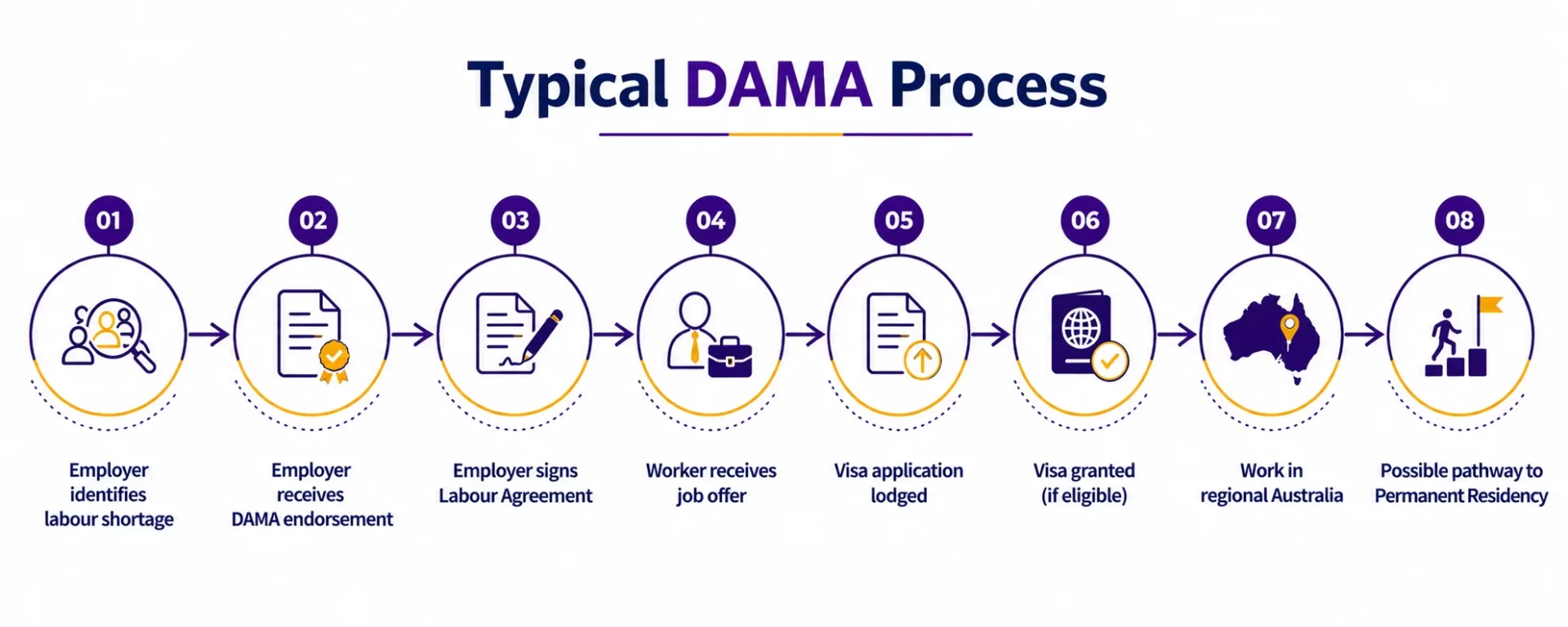
How Does the DAMA Program Work?
The process involves three key parties:
- Regional Designated Area Representative (DAR)
- Australian Employer
- Skilled Overseas Worker
Who Can Apply?
To qualify under the DAMA program, applicants generally need:
- A genuine job offer
- An approved regional employer
- Relevant qualifications
- Required work experience
- English language ability (subject to concessions where available)
- Health and character requirements
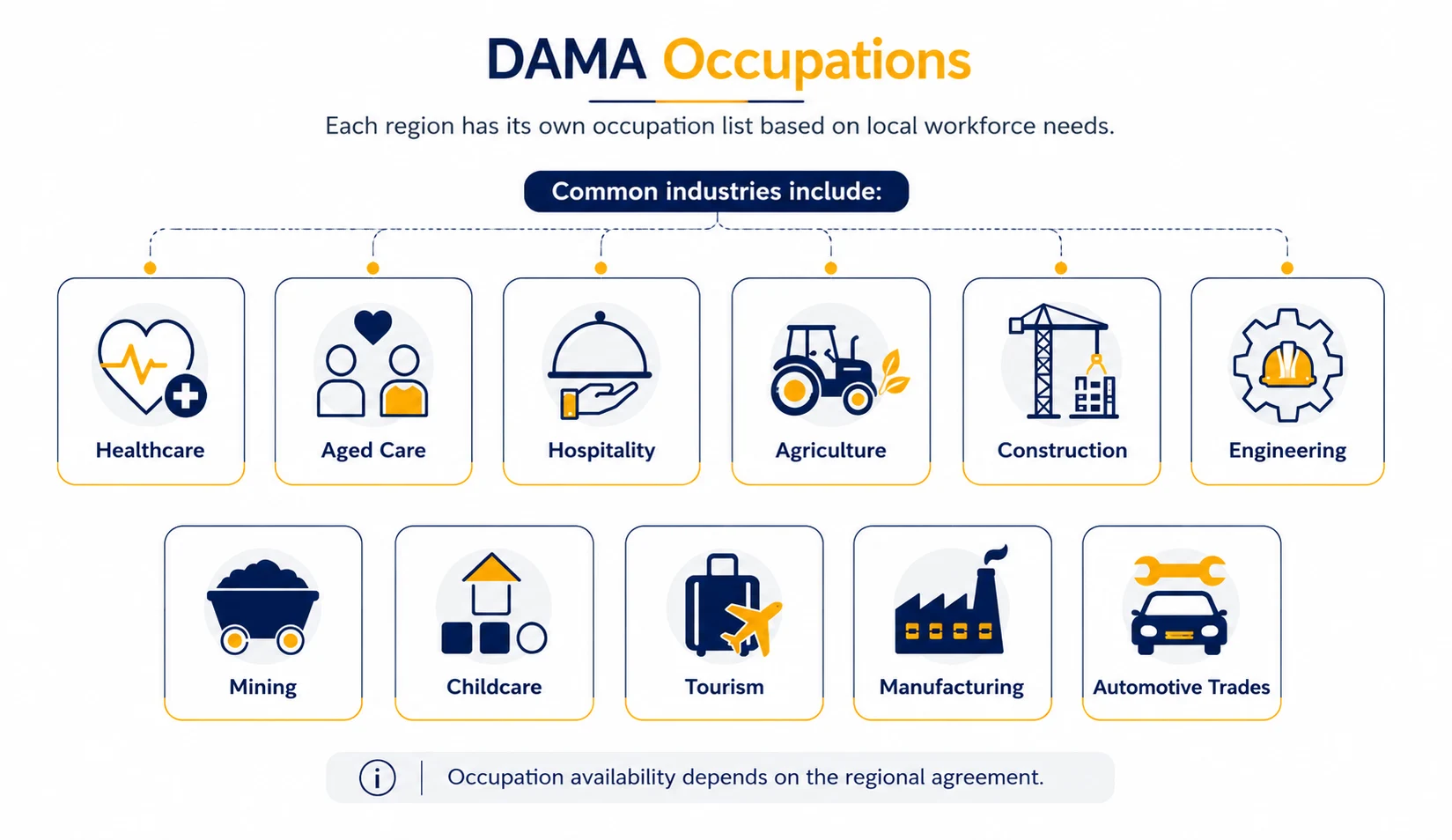
Each DAMA region has its own occupation list and eligibility criteria.
Who Can Sponsor Under DAMA?
Only employers located within approved DAMA regions can sponsor workers through the program.
Employers usually must demonstrate:
- Genuine labour shortages
- Lawfully operating business
- Ability to meet sponsorship obligations
- Genuine full-time position
Which Areas Have DAMA Agreements?
Several regional areas across Australia currently operate under DAMA arrangements. Examples include:
- Northern Territory
- Adelaide City Technology & Innovation
- Far North Queensland
- Goldfields (Western Australia)
- Kimberley (Western Australia)
- South West (Western Australia)
- Orana (New South Wales)
- Goulburn Valley (Victoria)
The list of participating regions may change as new agreements are introduced or updated.
DAMA Concessions
One of the biggest advantages of the DAMA program is that eligible applicants may receive concessions that are not available under standard employer-sponsored visas.
Depending on the regional agreement, concessions may relate to:
| Possible Concession | Description |
|---|---|
| English | Reduced language requirements for some occupations |
| Age | Higher age limits for eligible applicants |
| Salary | Concessions under specific agreements |
| Work Experience | Reduced experience requirements in some cases |
Not every region offers the same concessions.
DAMA vs Standard Employer Sponsored Visa
| DAMA | Standard Employer Sponsorship |
|---|---|
| Regional only | Available Australia-wide |
| Local occupation lists | National occupation lists |
| Regional endorsement required | No regional endorsement |
| Concessions available | Standard requirements apply |
| Regional labour shortages | General employer sponsorship |
Can DAMA Lead to Permanent Residency?
Yes. Many DAMA pathways offer opportunities to transition to Australian Permanent Residency, provided applicants continue to meet eligibility requirements.
Potential pathways include:
- Employer Nomination Scheme (Subclass 186)
- Other regional permanent residence pathways
- Future employer-sponsored PR options
Your pathway depends on:
- Occupation
- Region
- Employer
- Visa conditions
- Current migration policy
Advantages of the DAMA Program
Benefits include:
- More occupations available
- Greater employer flexibility
- Regional employment opportunities
- Possible concessions
- Strong workforce demand
- Potential pathway to PR
Challenges to Consider
Applicants should also understand that:
- Only approved regions participate
- Occupation lists differ by region
- Sponsorship depends on employer demand
- Regional residence is required
- Visa conditions must be followed
- Concessions vary between agreements
How to Improve Your DAMA Visa Chances
Helpful strategies include:
- Choose an eligible occupation
- Research participating DAMA regions
- Secure a genuine employer
- Prepare strong employment evidence
- Meet English requirements where applicable
- Understand your PR pathway early
- Seek professional migration advice
Why Professional Guidance Matters
The DAMA program is more complex than standard employer-sponsored visas because each region has its own occupation lists, concessions, and requirements.
Professional guidance can help you:
- Identify suitable DAMA regions
- Check occupation eligibility
- Assess employer sponsorship options
- Understand available concessions
- Plan your pathway to permanent residency
Why Choose Bombay Migrations?
At Bombay Migrations, we help skilled workers and employers navigate Australia’s regional employer-sponsored visa pathways.
Our services include:
- DAMA eligibility assessment
- Employer-sponsored visa guidance
- Regional migration strategy
- PR pathway planning
- End-to-end visa assistance
Whether you’re exploring the DAMA program or looking for employer sponsorship in regional Australia, our experienced team can help you find the right pathway.
Frequently Asked Questions
Disclaimer
DAMA agreements, occupation lists, concessions, eligibility requirements, and permanent residency pathways are subject to change based on Australian Government policies and individual regional agreements.