
An employer-sponsored visa in Australia is one of the most practical pathways for skilled workers who have a job offer from an Australian employer. In 2026, employer sponsorship continues to play an important role in helping Australian businesses fill skill shortages across industries such as healthcare, construction, engineering, IT, hospitality, trades, and education.
However, not every worker or employer automatically qualifies. To apply successfully, both the applicant and the sponsoring employer must meet specific eligibility requirements.
This guide explains who can apply for an employer-sponsored visa in Australia in 2026, key eligibility requirements, common visa pathways, and how applicants can improve their chances of approval.
Quick Summary: Employer-Sponsored Visa Australia 2026
- You usually need a genuine job offer from an Australian employer
- The employer must be eligible to sponsor overseas workers
- Your occupation must be relevant and eligible
- Skills, qualifications, experience, English, health, and character requirements matter
- Some employer-sponsored visas can lead to permanent residency
What Is an Employer-Sponsored Visa in Australia?
An employer-sponsored visa allows an Australian business to sponsor a skilled overseas worker when they cannot find a suitable local worker for the role.
These visas are commonly used by employers who need skilled staff in high-demand industries.
An employer-sponsored visa may allow you to:
- Work in Australia for an approved employer
- Live in Australia either temporarily or permanently, based on your visa type
- Bring eligible family members
- Build a pathway toward Australian Permanent Residency
- Gain valuable Australian work experience
Main Employer-Sponsored Visa Options in 2026
| Visa Type | Purpose | PR Pathway |
|---|---|---|
| Skills in Demand Visa | Temporary skilled work visa | Possible |
| Subclass 186 Visa | Employer-nominated permanent visa | Direct PR |
| Regional Employer Sponsored Visa | For regional employer sponsorship | Possible PR pathway |
The right visa depends on your occupation, employer, work experience, location, and long-term migration goal.
Who Can Apply for an Employer-Sponsored Visa?
You may be eligible if you meet key requirements.
1. You Have a Genuine Job Offer
A job offer from an Australian employer is usually the foundation of employer sponsorship. The role must generally be:
- Genuine
- Full-time
- Relevant to your skills
- Aligned with the nominated occupation
- Offered by an eligible employer
A weak or unclear job offer may create issues during assessment.
2. Your Employer Is Eligible to Sponsor
The employer must meet sponsorship obligations and show that the position is genuine. The employer may need to demonstrate:
- The business is legally operating
- The role is genuinely required
- Employment conditions meet Australian standards
- The business can pay the nominated salary
- The employer has complied with workplace and immigration laws
Employer eligibility is just as important as applicant eligibility.
3. Your Occupation Is Eligible
Your occupation must usually be listed under the relevant skilled occupation list or employer-sponsored visa framework.
Common high-demand sectors include:
- Healthcare
- Engineering
- IT and cybersecurity
- Construction
- Education
- Hospitality
- Automotive trades
- Electrical and plumbing trades
Choosing the correct occupation is important because it affects visa eligibility and future PR options.
Applicant Eligibility Requirements
Applicants must usually meet several requirements before applying.
Skills and Qualifications
You must show that you have the required skills for the nominated role. Evidence may include:
- Degree or diploma certificates
- Trade qualifications
- Employment references
- Skills assessment, if required
- Professional licences or registrations
Work Experience
Relevant work experience is often required. Useful documents include:
- Employment reference letters
- Payslips
- Tax records
- Position descriptions
- Contracts
- Experience certificates
Your work experience should match the nominated occupation.
English Language Ability
Most employer-sponsored visas require English language evidence. Requirements may vary depending on:
- Visa subclass
- Occupation
- Passport country
- Exemptions
- Employer nomination pathway
A stronger English score can also help with future PR pathways.
Health and Character Requirements
Applicants are required to meet Australian health and character criteria. This may include:
- Medical examinations
- Police clearance certificates
- Immigration history checks
- Character declarations
Employer Requirements
The sponsoring employer must also meet requirements. Common employer responsibilities include:
- Offering a genuine position
- Paying the correct salary
- Meeting sponsorship obligations
- Providing lawful employment conditions
- Cooperating with Department requests
- Keeping accurate employment records
If the employer does not meet requirements, the visa may be delayed or refused.
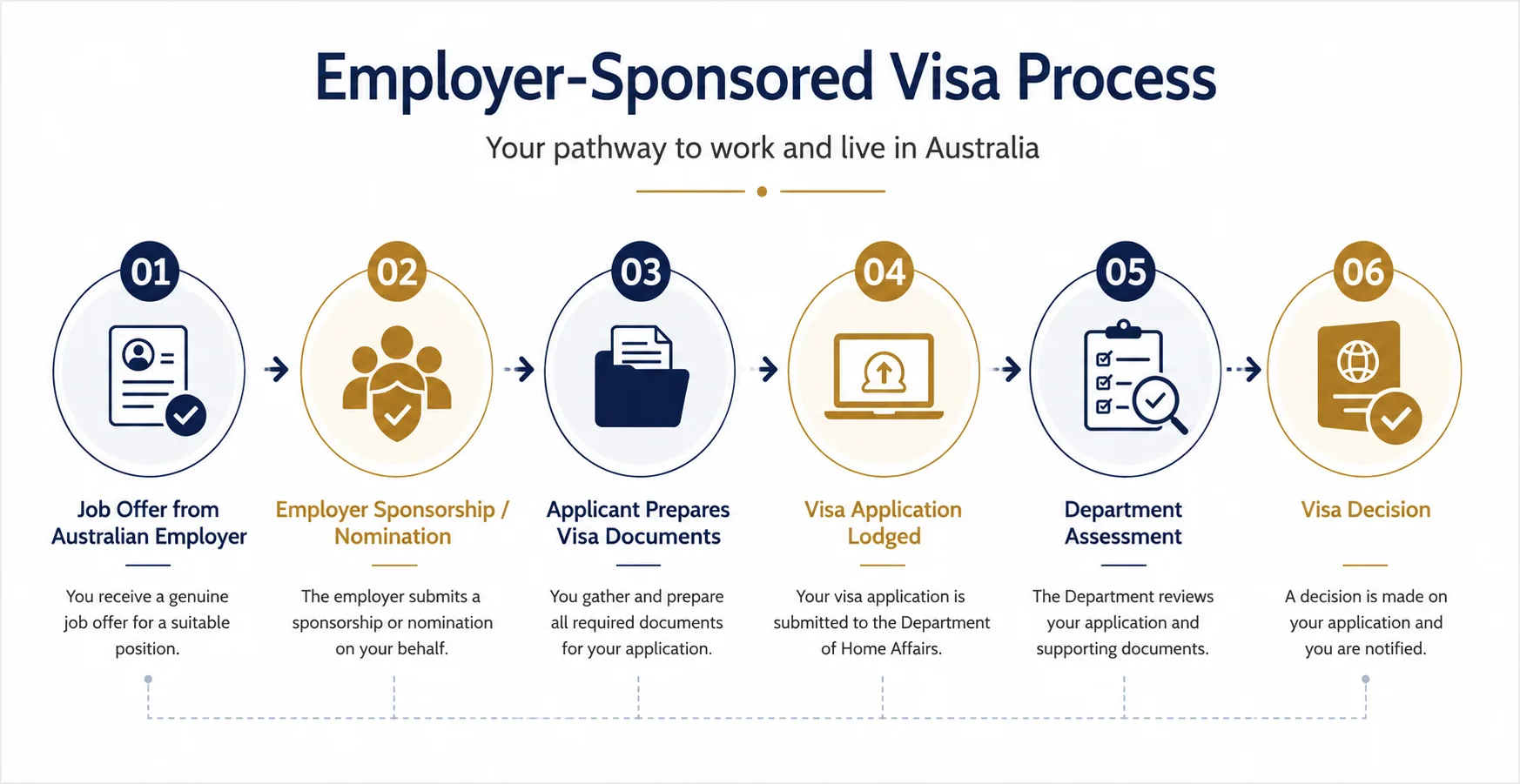
Documents Usually Required
| Document Category | Examples |
|---|---|
| Identity Documents | Passport, birth certificate, national ID |
| Employment Evidence | Reference letters, contracts, payslips |
| Qualification Documents | Degree, diploma, trade certificates |
| English Evidence | IELTS, PTE, or accepted English test |
| Employer Documents | Business details, nomination documents |
| Health & Character | Medicals, police checks |
Document requirements can vary depending on the visa type and applicant profile.
Can an Employer-Sponsored Visa Lead to PR?
Yes, some employer-sponsored visas can lead to Australian Permanent Residency. Common PR pathways include:
- Subclass 186 Employer Nomination Scheme
- Regional employer-sponsored PR pathways
- Skilled migration pathways such as 189, 190, or 491, where eligible
For many skilled workers, employer sponsorship is not just a work visa option. It can also become a long-term PR strategy.
Industries With Strong Sponsorship Demand
Employer sponsorship opportunities are often stronger in industries facing skill shortages.
High-demand industries include:
| Industry | Common Roles |
|---|---|
| Healthcare | Nurses, aged care workers, allied health professionals |
| Construction | Project managers, engineers, trades |
| IT | Software developers, cybersecurity specialists, analysts |
| Education | Teachers, early childhood educators |
| Trades | Electricians, plumbers, mechanics, carpenters |
| Hospitality | Chefs, cooks, hospitality managers |
Demand may change based on labour market needs and government policy.
Common Reasons Employer-Sponsored Visas Are Refused
Applications may face problems if:
- The job offer is not genuine
- Employer documents are weak
- Occupation is not suitable
- Applicant lacks required experience
- Salary does not meet required standards
- Documents are inconsistent
- English requirements are not met
- Health or character concerns arise
Both employer and applicant documents must be strong and consistent.
How to Improve Your Approval Chances
To improve your chances:
- Choose the correct visa pathway
- Confirm occupation eligibility early
- Ensure the employer can sponsor
- Prepare accurate employment records
- Meet English requirements
- Avoid inconsistent documents
- Review PR options before applying
- Seek professional migration guidance
A good strategy should consider both the immediate visa and future PR options.
Employer-Sponsored Visa vs Skilled Migration
| Employer-Sponsored Visa | Skilled Migration |
|---|---|
| Requires job offer | May not require a job offer |
| Employer plays a major role | Points score plays a major role |
| Can lead to PR | Can lead directly to PR |
| Good for skilled workers with sponsors | Good for high-point applicants |
| Occupation and employer eligibility matter | Occupation, points, and nomination matter |
The best option depends on your personal profile and migration goals.
Why Professional Guidance Matters
Employer-sponsored visas involve both employer and applicant requirements. Even if the applicant is qualified, the visa may still face issues if the employer nomination is weak. Professional guidance can help with:
- Visa pathway selection
- Occupation eligibility review
- Employer sponsorship assessment
- Document preparation
- PR pathway planning
- Reducing refusal risks
Why Choose Bombay Migrations?
At Bombay Migrations, we assist skilled workers and employers with employer-sponsored visa applications and PR pathway planning. Our support includes:
- MARA Registered Migration Agents
- Employer-sponsored visa guidance
- Skills in Demand Visa support
- Subclass 186 PR pathway advice
- Occupation eligibility assessment
- End-to-end visa assistance
Whether you are an employer looking to sponsor overseas talent or a skilled worker planning your Australian future, our team can guide you through the process.
Frequently Asked Questions
Disclaimer
Employer-sponsored visa requirements, occupation lists, salary thresholds, processing times, and PR pathways may change based on Department of Home Affairs policies and individual circumstances.